Creatinine Clearance (Cockcroft-Gault Equation)
Calculates CrCl according to the Cockcroft-Gault equation.
- For use in patients with stable renal function.
- Equation may be inaccurate depending on body weight and BMI; by including height, we calculate BMI and provide a modified estimate/range.
-
The relationship between creatinine and kidney function is curvilinear with a greater decline in kidney function occurring as serum creatinine rises from 1 to 2 mg/dL as compared to from 4 to 5 mg/dL.
-
The curvilinear nature of this relationship results in the need to estimate kidney function using an equation that takes into account factors that reflect underlying muscle mass (and subsequently creatinine generation) that have been developed where kidney function has been actually measured.
-
Patients with decreased eGFR have kidney disease and are at higher risk of both acute kidney injury and progressive kidney disease. Management of modifiable risk factors, such as blood sugar and blood pressure control in diabetes mellitus and hypertension, is critical to slowing progression.
- Medications should be dose-adjusted for the most recent available estimate of kidney function. In this setting, eGFR and creatinine clearance may be calculated and used similarly depending on the equation utilized when the medication was being developed, though they are physiologically different terms. Cutoffs for many medications are <60, <45 and <30 mL/min/1.73m2, as well as adjustments for advanced kidney disease and dialysis patients.
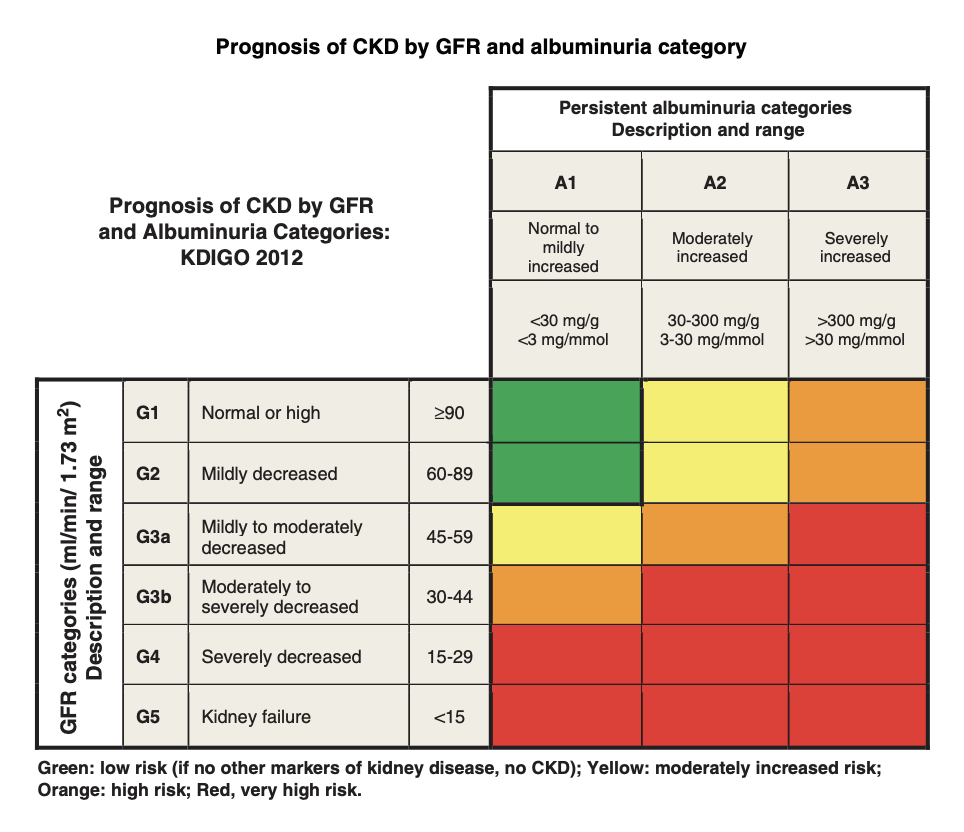
While creatinine clearance can be calculated, patients should be classified into CKD stage by both eGFR as estimated by either the MDRD or CKD-EPI formulae as well as the amount of urinary protein excretion. Patients with decreased eGFR, increased urinary albumin excretion or both, are at high risk of progressive CKD and should be referred to nephrology for further management.